Transaction hall
Surveys and the condition of a building
A survey is an opinion about a building formed on one day, from what could be seen without taking anything apart. Its value depends almost entirely on how deep the inspection was allowed to go.
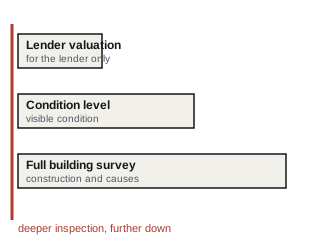
| Depth | Commissioned by | Looks at | Does not do |
|---|---|---|---|
| Lender valuation | The lender, for its own security | Whether the property is adequate security for the loan | Serve the buyer, or examine condition in any detail |
| Condition or homebuyer level | The buyer | Visible condition, services in outline, and matters affecting value | Open up construction or test services |
| Full building survey | The buyer | Construction, materials, visible defects and their likely causes, with remedial advice | See inside sealed structure, or guarantee absence of defects |
| Specialist report | The buyer, after a general survey flags something | One system or one defect in depth: drains, timber, movement, electrics | Assess the rest of the building |
The single most useful sentence in any report
Every report describes its own limitations, and that section is the one worth reading first. It states what was not inspected: under fitted floors, behind furniture, in a roof space with no safe access, in a locked outbuilding. A defect in an uninspected place is not a defect the report missed; it is a defect the report explicitly did not look for.
The defect families
Water getting in. Most reported problems in older housing are versions of this. Roof coverings past their life, failed flashings, blocked or undersized gutters, ground levels raised above a damp course, blown render trapping water in a wall. Water damage is progressive, so the same defect costs more the longer it is left, which is why it dominates negotiations.
Movement. Cracking is common and mostly historic. What matters is the pattern, the width, whether it passes through masonry units or follows joints, and whether there is evidence it is still moving. A report that describes cracking as long-standing and stable is saying something quite different from one that recommends monitoring.
Timber and ventilation. Rot and infestation follow persistent damp, so the useful question is what is keeping the timber wet. Blocked air bricks under a suspended floor cause more trouble than any organism.
Services. Wiring, heating, drainage and gas installations age out. A general survey will note their apparent age and recommend testing; it does not test them.
Alterations. Removed walls, converted lofts, extensions and knocked-through openings raise two separate questions: whether the work is sound, and whether it was consented and certified. The second is a legal matter and belongs with the conveyancer.
How to read the costs
Reports separate urgent work from work that will be needed in due course, and this distinction is more useful than the total. A long list of items in the second category is normal for any building past a certain age and is not a reason to walk away. A short list in the first category can be.
Older buildings behave differently
Construction before cavity walls and modern damp control was designed to let moisture move through the fabric and evaporate. Sealing such a building with impermeable renders, paints or floors traps the moisture instead of excluding it, and the result is often mistaken for rising damp. Any report on an older building is worth reading with this distinction in mind.
What a survey is not
It is not a guarantee, not an insurance policy, and not a valuation unless one was specifically commissioned. It is a professional opinion of visible condition on a particular day, and it is worth what its scope allows it to be worth.